Copper Clad Steel Wire (CCS)
- Home
/ Products
Copper Clad Steel Wire (CCS)
Copperclad Dead Soft Annealed Steel Wire
Copper Clad Dead Soft Annealed Steel Wire.
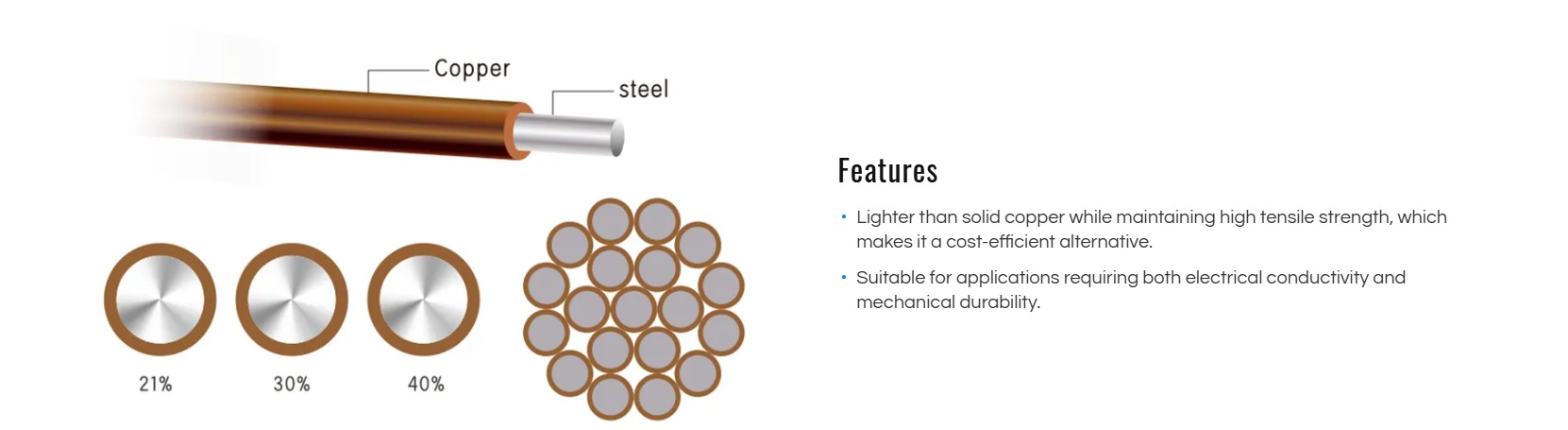
Copper-clad steel (CCS) wire is a composite conductor with a steel core and an outer copper layer, combining the conductivity of copper with the mechanical strength of steel. This design leverages the skin effect, where high-frequency electrical signals travel along the conductor’s surface, ensuring effective signal transmission as long as the copper layer is sufficiently thick.
Copperclad Steel Wire is the ideal solution for grounding wire for power type applications. Composed of a steel core with coppercladding, the steel wire gives the wire its strength and the consistent layer of copper provides electrical conductivity and resistance to corrosion.
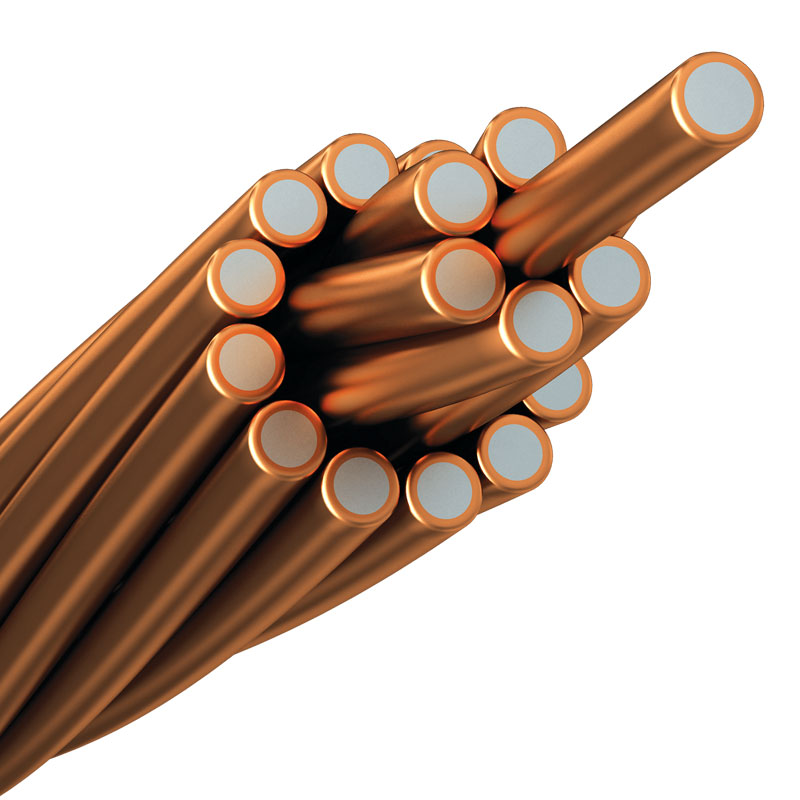
To manufacture Copperclad Steel Wire, carbon steel (low, high strength and extra high strength) is bonded with a uniform layer of oxygen-free coppercladding to achieve 30% and 40% IACS (International Annealed Copper Standard) conductivities. The material is available in a single wire, 3, 7 and 19 cable strands with some sizes jacketed to give the wire a different appearance to copper.
Copperclad Steel Wire from can be jacketed to further reduce copper theft and is available in black with green stripe or grey.
 |
Typical Applications
|
Copperclad Dead Soft Annealed Steel WireFeatures:
Applications:
|
Copperclad Steel Wire—High Strength/Extra High StrengthFeatures:
Applications:
|
Copperclad Steel Wire—High Strength/Extra High StrengthFeatures:
Applications:
|
High Strength (HS) and Extra High Strength (EHS) copperclad steel wire provides the same conductivity and corrosion resistance as copper while maintaining the high strength of steel. Frequently used for overhead ground wire and messenger wire, HS and EHS copperclad Steel Wire can resist mechanical damage caused during installation plus electrical damage during a fault condition. The core carbon steel is bonded with a uniform layer of oxygen-free coppercladding to ensure that the copper will not flake, crack or peel when the wire is twisted, installed or buried.